Renaissance: The Transformation of the West
While it's easy to get caught up—and, rightfully so—in the art of the Renaissance, you cannot have a full-rounded understanding of just how important these centuries were without digging beneath the surface, without investigating the period in terms of its politics, its spirituality, its philosophies, its economics, and its societies. Do just that with these 48 lectures that consider the European Renaissance from all sides, that disturb traditional understandings, that tip sacred cows, and that enlarges our understanding of how the Renaissance revolutionized the Western world.
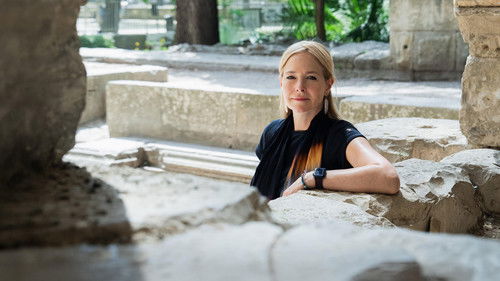
Cast: Jennifer McNabb
Season 1
48 episodes
- 1. Spirit of the ReniassanceHow did the Renaissance—as it occurred in Italy and in other parts of Europe—pioneer a new way of thinking about history itself? Who, exactly, was the typical “Renaissance Man”? Get answers to these and other questions about the Renaissance’s powerful fusion of classical and medieval worldviews.CCFeb 1, 2018
- 2. Rebirth: Classical Values Made NewHere, consider how the key contexts and values of the European Renaissance set the stage for a new era of questions. The two chief examples you’ll use to chart the origins of the European Renaissance are the Black Death and the letters of Petrarch.CC27minFeb 8, 2018
- 3. The Medieval Roots of Italian RenaissanceDiscover why the Renaissance first bloomed in, of all places, Italy. First, look at the politics and economics of medieval Italian states. Then, explore how the legacies of antiquity gained traction throughout the peninsula. Finally, consider the influence of trade revivals, a dynamic social order, and the profits from holy wars.CC32minFeb 15, 2018
- 4. The Rise of the HumanistsFocus on one of the most-challenging foundational concepts of the Renaissance: humanism. Professor McNabb outlines how and why education underwent its extreme makeover, explores the fields that dominated this new way of learning, and introduces you to humanist schools and schoolmasters.CC33minFeb 22, 2018
- 5. Renaissance Florence: Age of GoldFlorence, defined by hierarchy and inequality, has become synonymous with the Italian Renaissance. How did this happen? Here, you will explore the complex political journey of this “most noble” of cities from model republic to six decades of domination by the iconic Medici family, and back again.CC31minMar 1, 2018
- 6. Renaissance Venice: More Serene RepublicDive into the byzantine history and legacy of Venice during the period of the Renaissance, when the city managed to prosper even without that most valuable of commodities: land. Learn how Venice was shaped by its merchant elite, how it joined the ranks of Italian city-states, and how Venice experienced humanism.CC31minMar 8, 2018
- 7. Renaissance Rome and the Papal StatesInvestigate how the new learning in Rome challenged the wisdom of centuries of spiritual authority as the capital of Christianity. While exploring Rome’s papal history, encounter the noble family who considered it their birthright to wield control over the city: the infamous Borgias (including Cesare and Pope Alexander VI).CC32minMar 15, 2018
- 8. Renaissance Italy’s Princes and RivalsIn this lecture, turn to the other great power players in Renaissance Italy, including the kingdoms of Naples and Sicily and the duchy of Milan. Then, examine the eclipse of the age of the republics by the age of the tyrants: elite families who used cunning to obtain—and maintain—positions of authority.CC33minMar 22, 2018
- 9. Renaissance Man as Political AnimalRenaissance Man can perhaps best be understood as an educational and political ideal, someone as schooled in warfare as he was in classical antiquity. Here, meet three men whose lives and works exemplify different iterations of the Renaissance Man in action: Niccolò Machiavelli, Baldassare Castiglione, and Leon Battista Alberti.CC31minMar 29, 2018
- 10. Women and the Italian Renaissance CourtStep inside 15th- and 16th-century Italian courts to investigate how a number of smart, powerful, and cunning women helped steer the course of the Renaissance. Among the women you’ll meet are Isabella d’Este, noted for her trendsetting sense of style and substance, and the Italian poet, Veronica Franco.CC33minApr 5, 2018
- 11. Painting in the Early Italian RenaissanceUsing the careers and works of artists like Masaccio, Giotto, and Botticelli, discover how early Renaissance painting innovated and celebrated the experience of being human. In addition, you’ll examine the business side of art, including matters of patronage that were central to artists during the Italian Renaissance.CC33minApr 12, 2018
- 12. Painting in the High Italian RenaissanceTurn now to the High Italian Renaissance era of painting, credited with a veritable artistic revolution in the art form. During this time, artists like Leonardo and Michelangelo were celebrities who rubbed shoulders with the rich and powerful. Not to be overlooked: the role of women painters, including Artemisia Gentileschi.CC33minApr 19, 2018
- 13. Italian Sculpture, Architecture, and MusicLearn how Renaissance architects and city planners—including Donato Bramante, Sebastian Serlio, and Andrea Palladio—imbued sculpture and architecture with tremendous ideological and practical power. Then, discover how Renaissance musicians helped move music out of the religious sphere and into the princely courts.CC33minApr 26, 2018
- 14. Letters in the Italian RenaissanceIn this lecture, examine the lives and careers of a trio of fascinating Renaissance authors who used their words to help write the Renaissance into the pages of history. Professor McNabb covers the merchant, Francesco Datini; the artist-biographer, Giorgio Vasari; and the Florentine historian, Francesco Guicciardini.CC32minMay 3, 2018
- 15. Renaissance Statecraft: A New PathVenture to the other side of the Alps for a closer look at what’s known as the “Northern Renaissance.” You’ll chart the political evolution of the region from barbarism to feudalism to feudal monarchy, explore why feudal monarchies trended toward weakness, and get a brief overview of power struggles among northern kings.CCMay 10, 2018
- 16. European Renaissance MonarchiesTurn the lens on the monarchical rivalries of the Northern Renaissance, which changed the course of Western politics as much as the rivalries in Italy. Focus on the rule of Isabella of Castile and Ferdinand of Aragon, the rise of the Tudors in England, and the waxing power of France.CC33minMay 17, 2018
- 17. The Birth of the Christian RenaissanceConsider the development of humanist thought in the north, which commingled with the idea of a Christian rebirth and a reordering of society’s morals that planted the seeds for the Reformation. Among the inquisitive and critical Christian humanists you’ll encounter are Erasmus and Thomas More.CC34minMay 24, 2018
- 18. Northern Renaissance Art and MusicUsing works by Matthias Grünewald, Jan van Eyck, Pieter Brueghel the Elder, Hans Holbein the Younger, and others, explore how northern artists breathed artistic life into themes of faith, duty, and fidelity. Then, visit the court of the dukes of Burgundy for a look at the music of Guillaume Dufay.CC33minMay 31, 2018
- 19. Northern Renaissance Literature and DramaMeet the Northern Renaissance authors and playwrights who offered entertainments and edification in the page and on the stage—authors who would become some of the greatest writers in Western history. These geniuses include François Rabelais; Miguel de Cervantes; William Langland; Geoffrey Chaucer; and, of course, William Shakespeare.CC35minJun 7, 2018
- 20. Did Women Have a Renaissance?Examine the “woman question”: the contemporary debate about Renaissance women’s abilities and deficiencies. The question, as you’ll learn, was really about access to education. Along the way, you’ll consider whether we can say women had a renaissance of their own—and why that issue still matters today.CC33minJun 14, 2018
- 21. Renaissance Life: The Rural ExperienceIn the first of several sketches on the conditions of Renaissance life, explore the geographical setting where the vast majority of the European population lived at the time: the countryside. You’ll look at festivals and feast days, types of settlements, the competition for land, and the peasant rebellions that followed.CC35minJun 21, 2018
- 22. Renaissance Life: The Urban ExperienceHow exactly do we define “urban” during the Renaissance? How did three, early modern institutions—craft guilds, confraternities, and public drinking establishments—help to define the urban experience? Find out in Professor McNabb’s fascinating lecture on the urban experiences of rich and poor alike.CC35minJun 28, 2018
- 23. Renaissance Life: Crime, Deviance, and HonorContinue exploring daily life during the Renaissance by turning to issues of personal crisis—and their consequences. In studying crime, deviance, and Renaissance attitudes toward honor and shame, you’ll discover how early modern communities and authorities sought to order the world and project their morality.CC32minJul 5, 2018
- 24. Renaissance Life: MarriageMarriage during the Renaissance was a major component of the “good life” during the period. It was also a complicated affair shaped by the intersection of private desires with more practical considerations. Delve into the ways Renaissance societies constructed marriage, and how marriage customs differed depending on geographic location.CC34minJul 12, 2018
- 25. Renaissance Life: Home and HearthWhat was domestic life like during the Renaissance? Get a feel for it with this lecture that highlights several topics related to home and hearth. These topics include: food culture (with a focus on baking), the practicalities of dress, the details about childrearing, and the role of servants and retainers.CC34minJul 19, 2018
- 26. Renaissance Faith: Medieval ContextsExamine the two medieval heavyweights whose legendary disputes illustrate some key points about faith and power in the Renaissance world: King Philip IV of France and Pope Boniface VIII. Then, learn how new and revitalized orders—including Ci stercians and Franciscans—attracted adherents in astonishing numbers.CC34minJul 26, 2018
- 27. Renaissance Faith: The PapacyThe particular conditions of 15th- and 16th-century Italy allowed the popes to augment their power and fashion themselves as rulers. Here, explore papal programs designed to cement Rome as Christendom’s true capital (after a century of geographic dislocations) and their architects, including Nicholas V, Pius II, and Sixtus IV.CC33minAug 2, 2018
- 28. Renaissance Faith: Religious UniformityTake a closer look at the ways in which European political authorities dealt with matters of faith in their drive to enhance authority. You’ll learn about English theologian John Wyclif’s challenges to traditional Christian authority, the persecution of European Jews, and the birth of the Inquisition.CC34minAug 9, 2018
- 29. Luther: Breaking the Christian ConsensusThe Renaissance is vital to understanding how Martin Luther took on the church and not only survived but thrived, initiating a protest movement that put an end to more than 1,000 years of Christian consensus. Start considering Martin Luther as a man of a very particular historical moment.CC34minAug 16, 2018
- 30. Radical Reform in Renaissance EuropeProfessor McNabb highlights the many fractures that strengthened the shockwaves Martin Luther created in Christianity—some of which he couldn’t foresee or control. Learn the importance of the Anabaptists, the tumult of the German Peasants’ War, and why Martin Luther resists easy demonization or lionization.CC33minAug 23, 2018
- 31. Renaissance and Reformation: ConnectionsTurn your attention to various calls for a reformation of faith identifiably shaped by the new learning of the Renaissance and the ideas of Huldrych Zwingli and John Calvin. Calvin’s ideas traveled on to Scotland, where the Reformation, working in tandem with powerful men, toppled a monarch from the throne.CC32minAug 30, 2018
- 32. English ReformationEmbark on an exciting look at the causes, processes, and consequences of the Tudor reformations, featuring some of the most famous personages in English history, including Henry VIII, Thomas Cromwell, and Elizabeth I. What made this path to reform so different from events playing elsewhere on the European continent?CC34minSep 6, 2018
- 33. Catholic Reformations: The Road to TrentWhy didn’t the Catholic Church defeat the Reformation? Why didn’t it do more to stop Martin Luther? Cultivate a new way of thinking about the papal response to the theological revolution—epitomized by the Council of Trent, which created a Roman Catholic identity.CC35minSep 13, 2018
- 34. Catholic Reformations: Spiritual RevivalIn the face of the slings and arrows of Protestant reformers, the Catholic Church lauded a number of individuals whose commitment to the “true faith” offered a balance to the Reformation that threatened to bury Catholicism. Learn how men and women became exemplars of piety during the Catholic Reformation.CC33minSep 20, 2018
- 35. Reformation Culture: Continuity and ChangeGet a feel for what it was like to be a Protestant or Catholic in Reformation Europe. Your focus here: the culture wars that accompanied this period, including the rise of iconoclasts like Andreas Bodenstein von Karlstadt, the use of vernacular language in religious services, and the dawn of Baroque art.CC35minSep 27, 2018
- 36. Renaissance War and Peace: DiplomacyIn the first of several lectures on the interaction among the states of early modern Europe, learn how diplomacy operated in a Europe increasingly characterized by religious dissention and violence. Central to this subject is the important role of permanent ambassadors and other diplomatic figures.CC34minOct 4, 2018
- 37. The French Wars of ReligionReligious violence kept France in its grip for an entire century. Discover how the French Wars of Religion sparked both bloodshed and a new way of thinking about the relationship between individuals and the figures of power to whom they owed allegiance (a favorite topic of Renaissance writers).CC35minOct 11, 2018
- 38. The Dutch RevoltWitness a number of factors you’ve examined in other lectures collide in a fascinating (if also, destructive and costly) way during the Dutch Revolt. You’ll also see a glimmer of the new demands of early modern warfare and the role of print in presenting a platform for action.CC34minOct 18, 2018
- 39. The Spanish ArmadaGet the full story behind the Spanish Armada by paying attention to three key issues: the rivalry of Philip of Spain and Elizabeth I of England, the Spanish Armada’s fateful engagement with the English in the summer of 1588, and the untidy consequences of Spain’s defeat.CC31minOct 25, 2018
- 40. The Thirty Years’ WarWelcome to ground zero of religious warfare during the Age of Reformation: The Thirty Years’ War, which would engulf most of the European continent. By the end of this lecture, you’ll learn how this struggle drew the map of Europe that would exist until the French Revolution.CC33minNov 1, 2018
- 41. Renaissance at Arms: The Military RevolutionWhat, exactly, constitutes a military revolution? What are the four major changes that happened between 1560 and 1660 that transformed warfare? How did a typical warrior from the 15th century compare to his counterpart 200 years later? How did large gunpowder weaponry influence other military developments?CC34minNov 8, 2018
- 42. Renaissance and the Birth of Modern ScienceProfessor McNabb guides you through the intersection of Renaissance values and patronage with the new ways of thinking about the universe brought about by the Scientific Revolution. See how many of the activities and individuals associated with this period exhibit key dynamics of the Renaissance covered in other lectures.CC35minNov 15, 2018
- 43. Renaissance and Magic: WitchcraftBetween 1450 and 1700, somewhere between 40,000 to 60,000 people were executed on charges of witchcraft. Why did ideas about demons and witches have such an appeal in early modern Europe? How did these beliefs produce a new type of criminal to be targeted by secular and spiritual authorities?CC34minNov 22, 2018
- 44. Renaissance Encounters with IslamFrom the Reconquista to the collapse of Christian Constantinople to the rule of Suleiman the Magnificent, examine the relationship between Christians and Muslims during the early modern period—a relationship of competition and coexistence that shaped the development of the Western tradition.CC32minNov 29, 2018
- 45. Renaissance and Exploration: MotivesThe Age of Discovery can be thought of, in many ways, as a Renaissance project. Here, you’ll learn many of the values, motivations, and conflicts that fostered preconditions for European exploration, including a curiosity about the natural world, technological innovations, and the underlying quest for glory and riches.CC33minDec 6, 2018
- 46. Renaissance and Exploration: New HorizonsHow did Portugal and Spain set out to build overseas empires? Examine the first round of European expansion in the Americas and the Indian Ocean basin in the broader contexts of the Renaissance. Along the way, follow the journeys and discoveries of explorers like Christopher Columbus and Francisco Pizarro.CC33minDec 13, 2018
- 47. Early Modern Power: The New Global RivalriesTurn now to other European states joining the race for global empire. Consider the developments of three states—the Dutch Republic, Britain, and France—in an age of change, and learn how they helped spell the demise of the Ancien Régime and the birth of the modern world.CC34minDec 20, 2018
- 48. Renaissance Legacy: Burckhardt and BeyondReturn to the critical question that started this entire course: Have we reached the end of the Renaissance? Professor McNabb uses this concluding lecture to reflect on the meaning of the Renaissance for its contemporaries, for subsequent historians like Jacob Burckhardt, and for us in the 21st century.CC37minDec 27, 2018
Viewers also watched
Renaissance: The Transformation of the West
While it's easy to get caught up—and, rightfully so—in the art of the Renaissance, you cannot have a full-rounded understanding of just how important these centuries were without digging beneath the surface, without investigating the period in terms of its politics, its spirituality, its philosophies, its economics, and its societies. Do just that with these 48 lectures that consider the European Renaissance from all sides, that disturb traditional understandings, that tip sacred cows, and that enlarges our understanding of how the Renaissance revolutionized the Western world.
Creators and cast
- Cast
- Jennifer McNabb