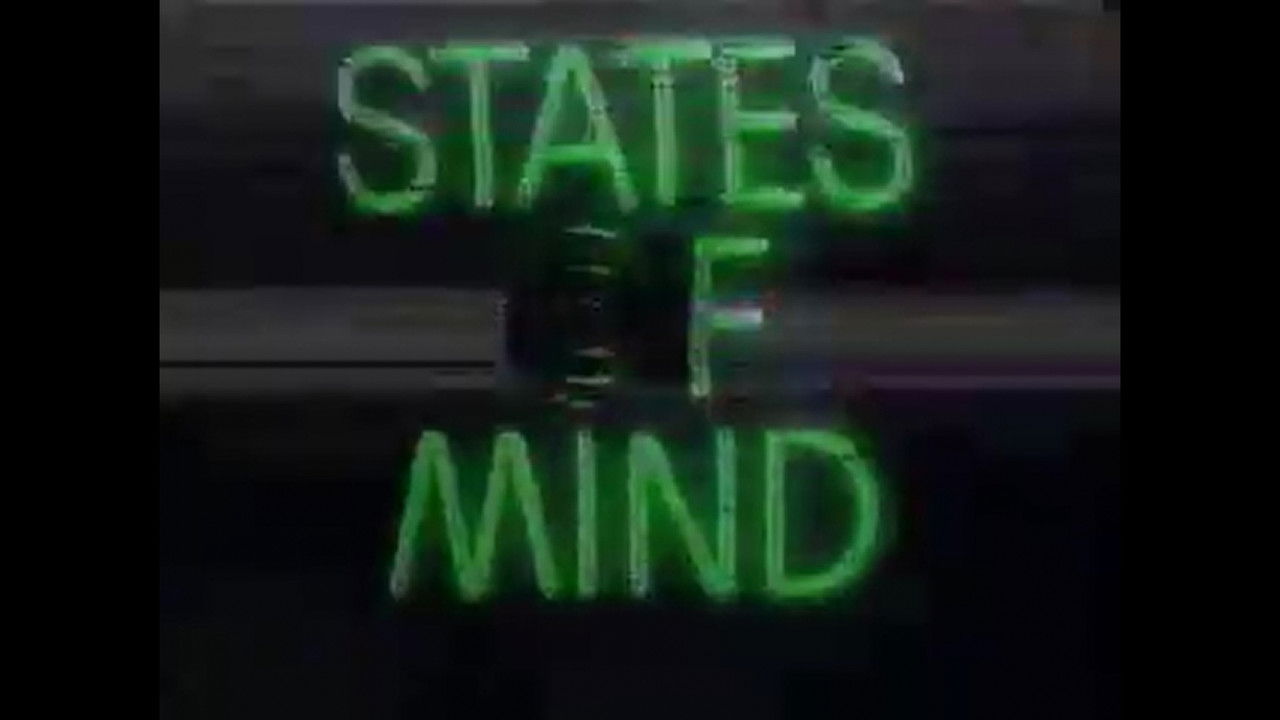
States of Mind
Link copied
Play S1 E1Series of programmes about psychology, in which Jonathan Miller talks to eminent psychologists about their theories and beliefs.
Cast: Jonathan Miller
HDCC
Season 1
15 episodes
- 1. George MillerProfessor George Miller, from Princeton University, explains what psychology is, what psychologists do, and the importance of the Second World War to the study of human behaviour.CCFeb 20, 1983
- 2. Jerome BrunerProfessor Jerome Bruner, from the New School for Social Research in New York, explains how the study of the 'mind', once a dirty word in psychology, has revolutionised the exploration of our mental lives. He also discusses insights into the growth of the infant mind and describes some of his own work with children.CCFeb 27, 1983
- 3. Richard GregoryUntil the present century vision was often regarded as a simple process - the eyes provide the brain with pictures of the outside world, and the brain just looks at them. We now know that visual perception is one of the most complicated functions that the human brain performs. Professor Richard Gregory, from the University of Bristol, shows how the study of illusions has demonstrated how much of what we see ' out there' is actually generated from within.CCMar 6, 1983
- 4. Daniel DennettUntil recently psychologists shunned questions about the philosophy of 'mind' in the belief that they were tedious and unanswerable. Professor Daniel Dennett , from Tufts University in Boston, describes how the study of computers and artificial intelligence has helped philosophy and psychology to enjoy a more fruitful relationship.CCMar 13, 1983
- 5. Stuart HampshireOne of Sigmund Freud's most important contributions to psychology was the notion of an unconscious mind which can guide our behaviour in curious and unexpected ways. This has not only given rise to a whole new branch of psychiatric treatment - psychoanalysis - but has transformed the way in which people think about .themselves and their actions. Stuart Hampshire, Warden of Wadham College, Oxford, discusses the significance of Freud's 'discovery'.CCMar 20, 1983
- 6. Jerome FodorIn the 18th century it was assumed that the mind was 'transparent to itself '- that everything occurring in the brain was available to conscious thought. This idea seemed much less plausible after Freud introduced the notion of an unconscious mind housing 'dangerous' thoughts and desires. Modern psychology, though, has introduced another picture of unconscious mental processes, which has nothing to do with conflict, guilt or repression, but without which it is almost impossible to account for some of our distinctively human abilities, such as language. Professor Jerome Fodor, from the Massachusetts Institute of Technology, discusses how this other non-Freudian unconscious might be organised, and how it relates to our conscious thinking.CCMar 27, 1983
- 7. Norman GeschwindInformation not available.CCApr 3, 1983
- 8. George MandlerFor most people the expression of such feelings as fear, anger, jealousy or love forms an important part of human life. It is now recognised that psychologists have paid little attention to these fundamental human experiences. George Mandler, Professor of Psychology at the University of California, offers a new approach to the understanding of the emotions.CCApr 16, 1983
- 9. Rom HarréThe most publicised work in understanding human social behaviour in recent years has been the 'naked ape' approach which attempts to explain our dealings with each other in terms of how animals behave in groups. Rom Harré, Fellow of Linacre College, Oxford, takes a different view and stresses the more distinctively human aspects of our social lives.CCApr 23, 1983
- 10. Robert HindeRobert Hinde has spent most of his academic life at Cambridge studying the behaviour of birds and monkeys. More recently he has turned his attention to the more complex issue of human relationships. In this programme Professor Hinde, who remembers teaching Jonathan Miller in the early 1950s, explains why there has been this change of emphasis in his work.CCApr 30, 1983
- 11. Clifford GeertzIn Victorian times armchair anthropologists regarded tribal man as a fossilised remnant of our primitive ancestors. Clifford Geertz, Professor of Social Science at Princeton, who has done extensive field work in Indonesia and Morocco, explains why he thinks that the magical rites of pre-literate people express a different, but by no means primitive, attitude to the world around them.CCMay 7, 1983
- 12. Ernst GombrichThe act of painting a scene is normally imagined to be an exercise in manual dexterity. There is, however, a great deal more to drawing or painting than the simple 'copying' of a visual image on to paper or canvas. Sir Ernst Gombrich, author of Art and Illusion, has spent his life exploring the psychological processes which underlie the making of pictures.CCMay 14, 1983
- 13. B. A. FarrellThe work of psychologist Sigmund Freud forms the basis of psychoanalysis, but his ideas have also profoundly altered the way we account for our own everyday behaviour and the behaviour of others. Brian Farrell, Reader in Mental Philosophy at Oxford, discusses some of Freud's revolutionary theories, and how they relate to the practice of psychoanalysis.CCMay 21, 1983
- 14. Hanna SegalAlthough psychoanalysis is usually associated with the work of Sigmund Freud, a number of psychologists have found themselves in disagreement with certain aspects of Freudian theory, and have developed their own variant forms of analytic treatment. In this country the work of Melanie Klein who became convinced of the importance of experiences in the first year of life has been particularly influential. Dr Hanna Segal , an analyst who worked closely with Mrs Klein , explains the basis of Kleinian analysis.CCMay 28, 1983
- 15. Thomas SzaszDespite remarkable advances in medical science over the past century, there is still no clear medical understanding of the causes of most forms of insanity. Dr Thomas Szasz, author of The Manufacture of Madness and The Myth of Mental Illness, argues that madness has been misrepresented as a disease, and that this has enabled psychiatrists to tyrannise and imprison the mad in the name of philanthropy or therapy.CCJun 4, 1983
Viewers also watched


States of Mind
19831 season15 episodesEnded
Series of programmes about psychology, in which Jonathan Miller talks to eminent psychologists about their theories and beliefs.
Creators and cast
- Created by
- Philip Speight, David F. Turnbull
- Cast
- Jonathan Miller
- Studio
- BBC
Maturity rating
Not yet rated.
Audio languages
English
Where to watch
Not currently listed on any streaming, rental or purchase service.
Details and artwork from TMDB. Availability from JustWatch and can change without notice.